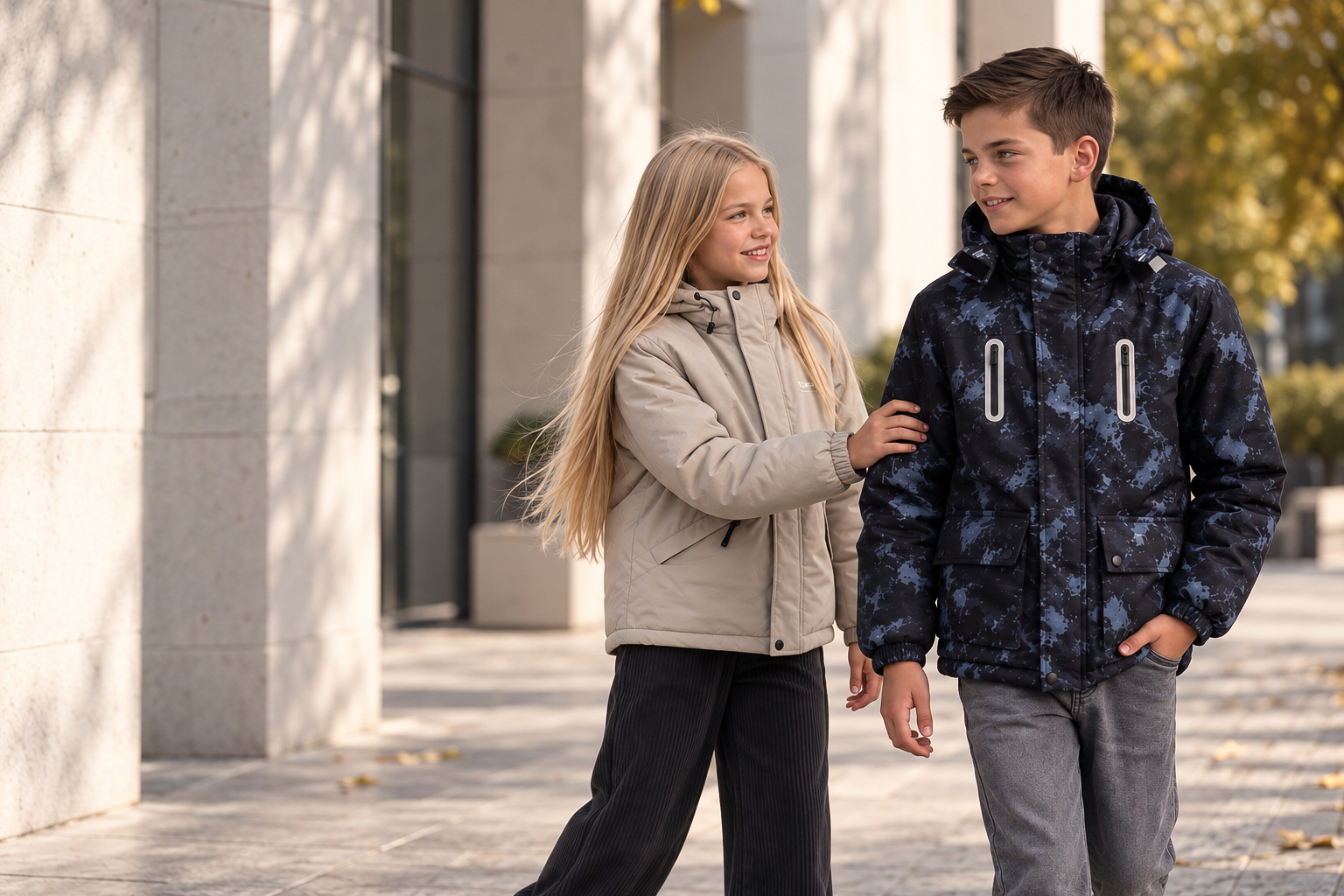
The Estonian winter is cold, wet and windy, and the weather can change several times a day. A good winter wardrobe is not one thick jacket but well thought-through layers: a waterproof, windproof outer shell, warm layers underneath, and proper hats, mittens and boots keep a child warm, dry and mobile through both outdoor lessons and an evening in the snow.
What a child's winter wardrobe is made of
1
Jacket or snowsuit — by age
For a younger child (roughly up to 4–5 years), an all-in-one snowsuit is the warmest and most reliable: snow cannot get in even after a fall. An older child is better served by a separate jacket and snow trousers — they can be mixed and worn from autumn onwards.
2
Warm layers under the shell
Next to the skin, use a thin moisture-wicking base layer (merino wool or a technical fabric), then fleece or a wool jumper over it. Avoid pure cotton as a base layer — it stays wet with sweat and chills the child. Adjust the number of layers to the weather.
3
Head, hands and feet
Much of the warmth is lost through the head and extremities. You need a snug hat that covers the ears, waterproof and warm winter boots, mittens (not gloves — a small child’s fingers stay warmer together) and a neck warmer. A snood is safer than a long scarf.
What to look for in the outer shell
Four signs of a good winter jacket
A waterproof and windproof outer shell — snow and slush must not soak through, and wind must not carry the warmth away.
Room for layers underneath without buying several sizes too big: the jacket should fit a fleece but not slip off the shoulders or swallow the hands in the sleeves.
Simple fastenings a child can manage alone — a large zip pull, snaps and hook-and-loop tabs let a child dress themselves at daycare.
Reflective details and bright surfaces — on the dark Estonian winter mornings and evenings, reflective strips and bright colours make a child visible to drivers.
Quick tips before buying for winter
Buy mittens and hats in pairs or with a spare — wet mittens will not dry during a day at daycare.
Size boots with a little room and try them with a warm sock — a too-tight boot leaves toes cold.
Check that the jacket waist and cuffs are adjustable with elastic or a drawcord so snow cannot get in.
Keep spare mittens and socks in the bag — in Estonian slush they get wet fast.
Check the size guide before buying
For winter clothes, measure the child's height and allow for a layer or two under the jacket. Amadeo sizes 86–164 follow height in centimetres, so finding the right number is easy.
Jackets, snowsuits, warm jumpers, hats and boots for children aged 0–14 — ready for the Estonian winter. Free shipping over 50 € across Estonia and 14-day returns.
For that kind of cold, choose a jacket with at least roughly 200–250 g of insulation (or equivalent wadding) and combine it with warm layers underneath. More important than the jacket alone is the complete outfit: a moisture-wicking base layer, a warm mid layer, a waterproof jacket, a snug hat, mittens and winter boots. Layers can be added or removed to suit the day.
Snowsuit or a separate jacket and trousers?
For a younger child and anyone who plays actively in the snow, an all-in-one snowsuit is warmer and more snow-proof, as nothing gets in at the waist. For an older child and one at daycare, a jacket and trousers are more practical: they can be put on alone, mixed separately, and the jacket worn in autumn and spring too.
What should a child wear under a snowsuit?
Next to the skin, a thin moisture-wicking base layer (merino wool or a technical fabric), then fleece or a thin wool jumper over it. In very cold weather, add one more mid layer. Avoid pure cotton — it absorbs sweat and leaves the child cold. Adjust the number of layers to the time outdoors and the temperature.
How do I size the jacket when there are layers underneath?
Go by the child’s height and leave a little room for layers, but do not buy several sizes up — a jacket that is too loose lets warmth escape and hampers movement. Between two sizes, choose the larger. Amadeo sizes 86–164 follow height in centimetres; exact measurements are in the size guide.