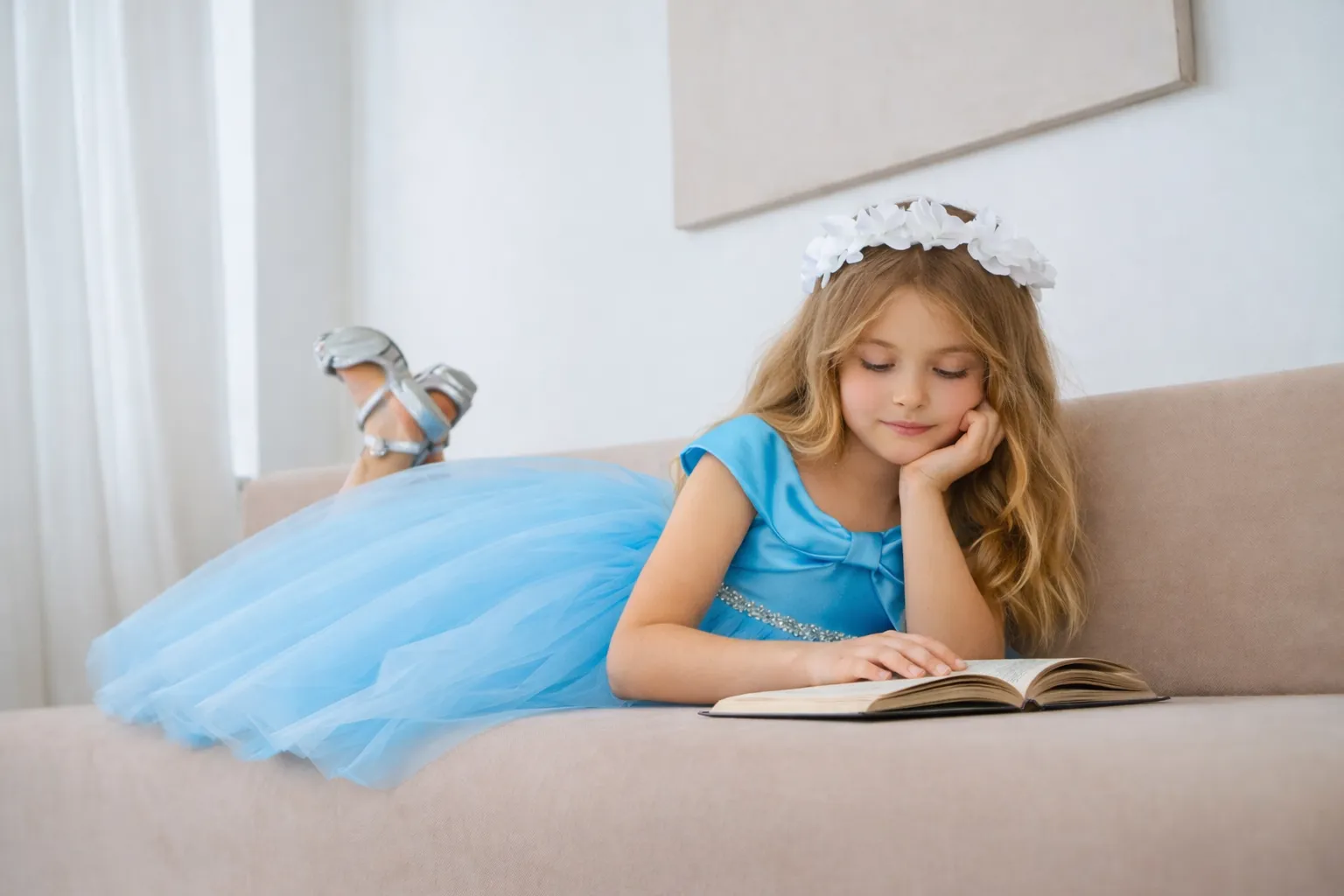
Children's clothes rarely wear out — they get ruined in the wash. The right temperature, a mild detergent and a little care when drying preserve colour, shape and softness, so the same jacket or dress can still reach the next child. Here is a simple routine that does not ask for extra time.
Three steps of care
1
Washing
Wash similar colours together and turn garments inside out to protect prints and seams. Choose a lower temperature — 30 °C is enough for everyday dirt — and use a mild detergent. Do not overload the machine: clothes need room to move in the water, or they neither come clean nor wear evenly.
2
Drying and shape
Where you can, air-dry and reshape the garment while still damp to avoid shrinkage and stretching. The heat of a tumble dryer shrinks cotton and encourages bobbling. Dry wool and technical fabrics flat — hanging stretches them out of shape.
3
Stains and storage
Treat a stain straight away — food and grass come out far more easily while fresh. Always store clothes clean, because an invisible mark turns yellow over time. Keep outgrown clothes sorted by size in boxes and label them, so the right one is easy to find next time.
A little care, a longer life
Four principles that protect a garment
Always read the care label — it tells you the temperature, drying method and ironing before you ruin anything.
A lower temperature saves both fabric and energy, and keeps colours brighter for longer.
Skip the fabric softener on technical and sportswear — it clogs the fibre and reduces breathability and water repellency.
Repair small holes and seams early, before they tear wider — that way a garment reaches the next child still intact.
Quick tips
Fasten snaps, zips and Velcro before washing so they do not snag or tear other clothes.
Turn items with prints and appliqués inside out and use a gentler programme.
Separate new, brightly coloured items for the first few washes, as they bleed easily.
Store outgrown clothes somewhere dry, not in a damp cellar — moisture brings mould and yellow patches.
The right size lasts longer
A garment that is too small stretches and wears out faster, while one that is too big takes more strain in the wash. Measure the child's height and pick the right number from the chart — our sizes run 86–164 by height, for ages 0–14.
For everyday dirt, 30 °C is enough and saves fabric, colour and energy. Wash heavily soiled clothes, or clothes after illness, at 40 °C; keep 60 °C for bedding and serious cases. Always follow the care label.
How do I get out food and grass stains?
Act fast. For a food stain, flush with cold water, add a little detergent, let it sit for a couple of minutes and then wash. A grass stain lifts if you rub in a little detergent or diluted vinegar and leave it for a while before washing. Avoid hot water, which sets the stain into the fabric.
Why do clothes bobble?
Bobbles form from friction, especially on soft cotton and blended fabrics. Reduce the rubbing: wash inside out, on a gentler programme and at a lower temperature, and do not overload the machine. A tumble dryer speeds up bobbling, so air-drying is better.
How do I store outgrown clothes?
Wash and dry clothes well before storing, because an invisible mark turns yellow over time. Sort garments by size into boxes, label each box with the size and season, and keep them somewhere dry. That way the right box is ready to hand for the next child.