
01
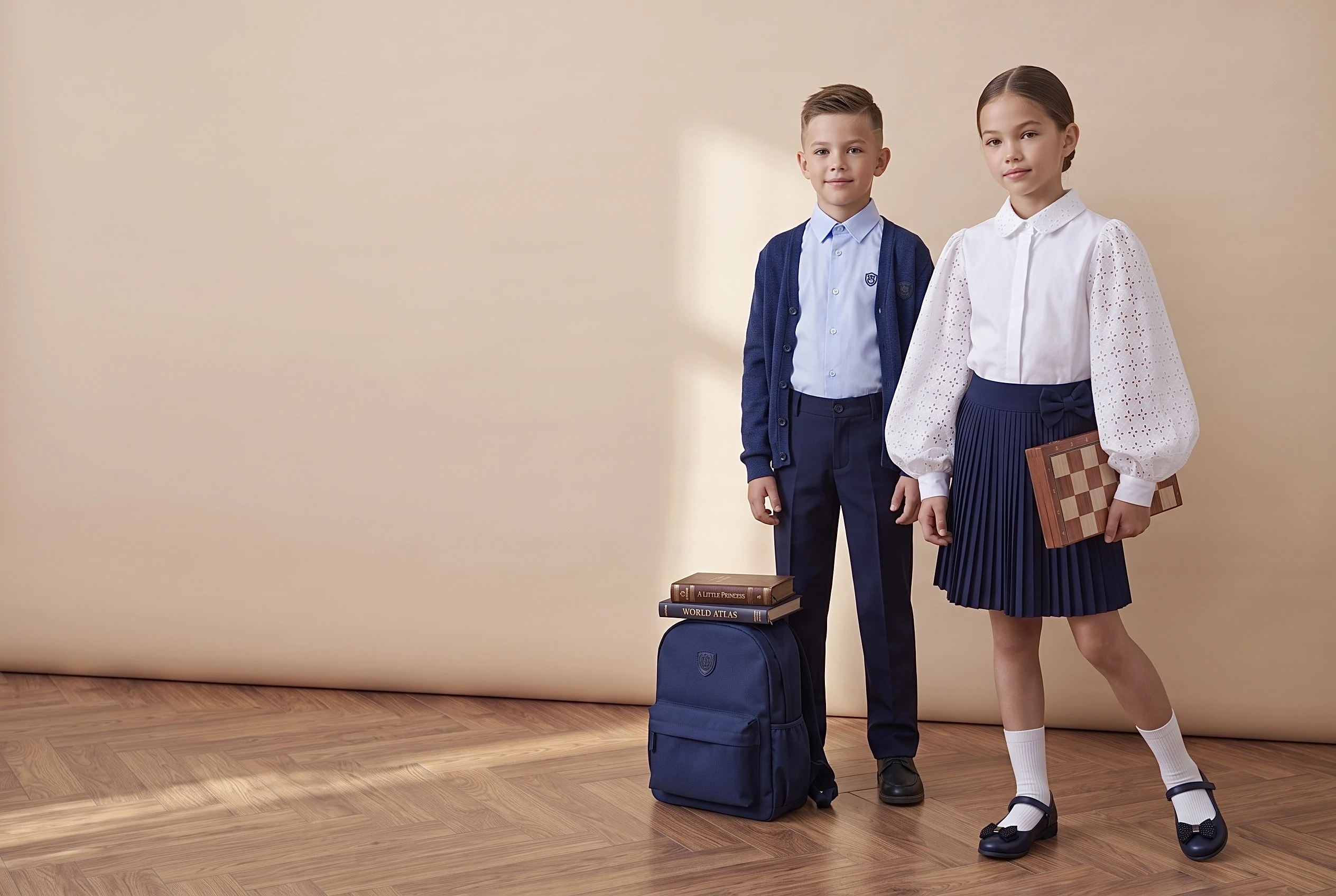
A school blouse starts with the shoulder fit
The shoulder seam should sit at the edge of the shoulder. When it drops down the arm, the extra sleeve length may look like useful growing room, but the blouse shifts under a bag and makes reaching less comfortable. A seam that sits too high pulls across the back.
Ask the child to reach forwards, sideways and overhead. A ruffle or lace detail should not rub below the chin or bunch thickly beneath a school-bag strap. Decoration works best when it looks special and the child forgets about it during wear.
- The button placket stays straight without gaping at the chest.
- The sleeve finishes at the wrist and does not cover the hand.
- The hem stays tucked into trousers or a skirt while seated.
02
Check collar and body length on a boy's shirt
One finger should fit comfortably inside the buttoned collar. A tight collar distracts all day; a very wide one loses its neat line. The shoulder rule is the same as for a blouse: the seam ends at the shoulder edge.
Check body length while seated and wearing the school bag. If the shirt immediately pulls from the trousers, the style is too short for the child's proportions. An excessively long hem is not ideal either because surplus fabric bunches at the waist.
- The cuff closes without pressure and the child can open it.
- The back does not pull tight with the arms stretched forwards.
- The shirt works with dark trousers and a soft cardigan.
03
A school skirt must work while seated and on stairs
The waistband should stay in place without pressing. Check for comfortable two-finger room and ask the child to sit down. An elastic or adjustable waist adds flexibility, but a skirt that is too wide rotates or slips during the day.
Judge length standing and sitting because the hem rises on a chair. A pleated or slightly roomier cut allows more movement than a very narrow shape. The child must be able to take a normal stride on stairs and squat.
- The waistband does not roll or leave a deep mark after sitting.
- The hem suits both school guidance and the child's comfort.
- The skirt works with at least two existing blouses and one layer.
04
Growing room: where it helps and where it does not
A little sleeve allowance, an adjustable waist or a couple of centimetres in body length can extend wear. The shoulder, collar and core skirt fit must be correct now because they cannot be solved with a simple turn-up.
Between sizes, compare the child’s measurements and the intended cut. If the style is already relaxed, the larger size is not automatically better. A clean shoulder line is often more important than maximum growing room on a smarter blouse or shirt.
05
Create more outfits with one purchase
Before adding to the basket, name at least three existing pieces that work with the new blouse, shirt or skirt. If there is only one answer, it may not be the most useful purchase right now.
A light top and dark bottom make a classic base, but the wardrobe need not be dull. Texture, a ruffle, an interesting collar or a restrained pattern adds personality; core colours keep the remaining combinations simple.


