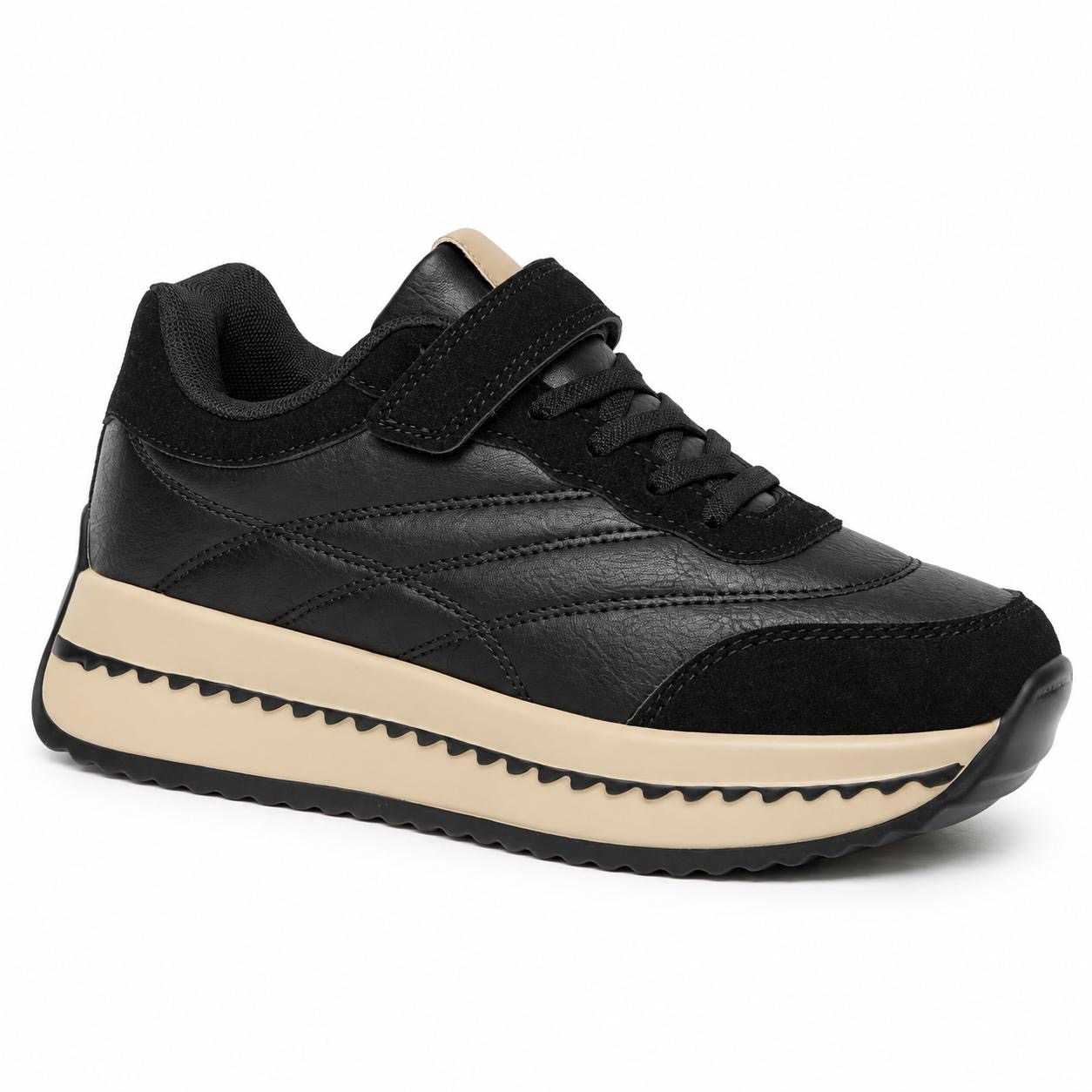
A good kids shoe starts with measuring the foot, not guessing a number. With the right length and a little growing room, the foot stays healthy, the child moves freely, and one pair lasts until the foot has genuinely outgrown it.
Three things to start with
1
Measure the foot and leave growing room
Stand the child up and measure both feet — they are often slightly different, so go by the larger. Leave about 0.5–1 cm in front of the toes for growth. Not two sizes up: a shoe that is too roomy slips and tires the foot.
2
What a good kids shoe has
A flexible sole that follows the foot, light weight, a breathable material and a secure fastening — velcro or a strap that holds the foot in place. A firm heel counter supports the ankle, and the toe box is wide enough for the toes to sit freely.
3
Choose by season and use
Sneakers for everyday and outdoors, sandals for summer, warm waterproof boots for winter, and light indoor shoes for daycare or school. One pair for everything does not work — spread the wear across a few.
Fit matters
Four things to remember when fitting
Check the fit standing, not sitting — a loaded foot is longer and wider and shows the real fit.
Leave roughly a thumb's width of free space in front of the big toe; the toes must not press against the front.
Refit every few months — a small child's foot grows fast, and a shoe that has gone tight does not always give a clear signal.
Don't pass down shoes that have moulded to another foot: the sole and heel have already taken someone else's shape and no longer support correctly.
Quick tips before buying
Try shoes on in the afternoon, when the foot has swollen a little over the day.
Bring the socks the child actually wears to the fitting.
Press a thumb over the toe area and let the child walk — watch that the heel does not lift or slip.
Shoe size goes by foot length and EU shoe number, not the height scale (86–164) used for clothes.
Check the size guide before buying
For shoes, foot length in centimetres is what matters. Measure the foot and match it to the EU number in the guide so the shoe is neither tight nor too roomy.
About 0.5–1 cm in front of the big toe — roughly a thumb's width. That lets the foot grow and slide forward when walking without the shoe being too loose. Shoes two sizes up slip and spoil the stride.
How often should I check a child's shoe size?
A small child's foot grows fast, so check every 2–3 months; for a school-age child once every six months is usually enough. The easiest way is to measure the foot standing and compare it with the size guide.
Are second-hand shoes okay?
Lightly worn, good-quality shoes are fine if the sole and heel are not worn down. A heavily worn pair that has moulded to another foot is not worth passing on — it no longer supports correctly.
How do I pick first walking shoes or daycare shoes?
For first steps, a flexible, light, thin sole that lets the foot feel the floor works best; a velcro fastening adds stability. For daycare, choose light indoor shoes the child can put on alone and that hold the foot securely in place.